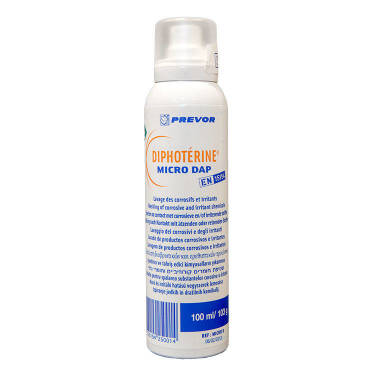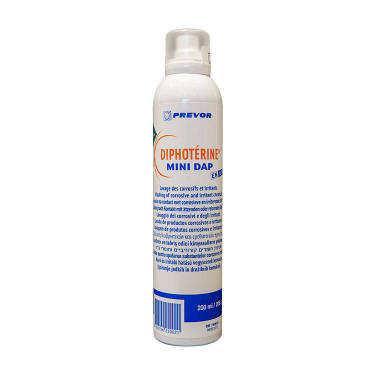
Diphoterine® Skin Products
Chemical Burn Skin Wash Solution
A chemical splash to the skin starts a race between the chemical and your response. Within 10 seconds, a corrosive agent can begin diffusing through the outer skin layer and into deeper tissue. Within one minute, the injury can become irreversible. What happens in that window — and what product is used — determines whether a worker returns to work the next day or faces weeks of treatment and recovery.
Passive water washing removes chemical from the surface. What it cannot do is stop the damage already under way beneath it. Water is passive — it dilutes but has no active chemistry. Once a corrosive has begun diffusing into tissue, washing the outside does not stop what is happening inside.
Diphoterine® skin wash products take a fundamentally different approach. As an active decontaminant, Diphoterine® works through three simultaneous mechanisms. First, mechanical washing flushes contamination from the skin surface. Second, its hypertonic formulation — more concentrated than tissue fluid — creates an osmotic draw that actively pulls diffused chemicals back out of the tissue rather than allowing them to continue inward. Third, its amphoteric and chelating action renders all seven major classes of chemical aggressor harmless: acids, bases, oxidisers, reducers, chelating agents, solvents, and alkylating agents. The person treating the injury does not need to identify the chemical — Diphoterine® is active across all of them.
The clinical evidence supports the advantage. A retrospective study at a UK specialist burns centre found wounds treated with Diphoterine® showed significantly greater pH recovery than those treated with water alone — a pH change of 1.076 versus 0.4 (p<0.05). A systematic review of published human studies found three out of four that measured pain reported a more pronounced decrease with Diphoterine® than with water controls.
Diphoterine® skin wash products are certified as Class IIa medical devices — sterile, non-toxic, non-allergenic, and phosphate-free. The portable format means they can be stationed at the exact point of chemical hazard — no plumbing, no installation, no maintenance. A full skin decontamination requires approximately 5 litres, compared to 900 litres for an emergency safety shower, reducing both response time and hypothermia risk.
Diphoterine® also offers a delayed wash benefit — it remains effective using an adjusted protocol up to 24 hours after exposure. Water used late provides dilution only.
Why choose Diphoterine® for chemical skin burns?
- Active decontamination — stops the reaction, not just the surface splash
- Works across all seven classes of chemical aggressor
- Significantly less volume than emergency safety showers
- Portable — stationed at the point of hazard, not at a fixed location
- No plumbing, installation, or maintenance required
- Immediate pain reduction in the majority of cases
- Delayed wash protocol effective up to 24 hours post-exposure
- Class IIa medical device — proven over 30 years of industrial and clinical use