

How Diphoterine® solution works
Water rinses a chemical off the surface. Diphoterine® solution goes further: it also draws out chemical that has already got into the skin or eye. Here is how, and why it matters.
A chemical injury takes time to develop
A heat burn does its damage in seconds. A chemical injury is different: the chemical keeps working after the splash, moving through the skin or eye and reacting with the tissue as it goes. That takes time, and it means there is a window in which the right washing can still change the outcome.
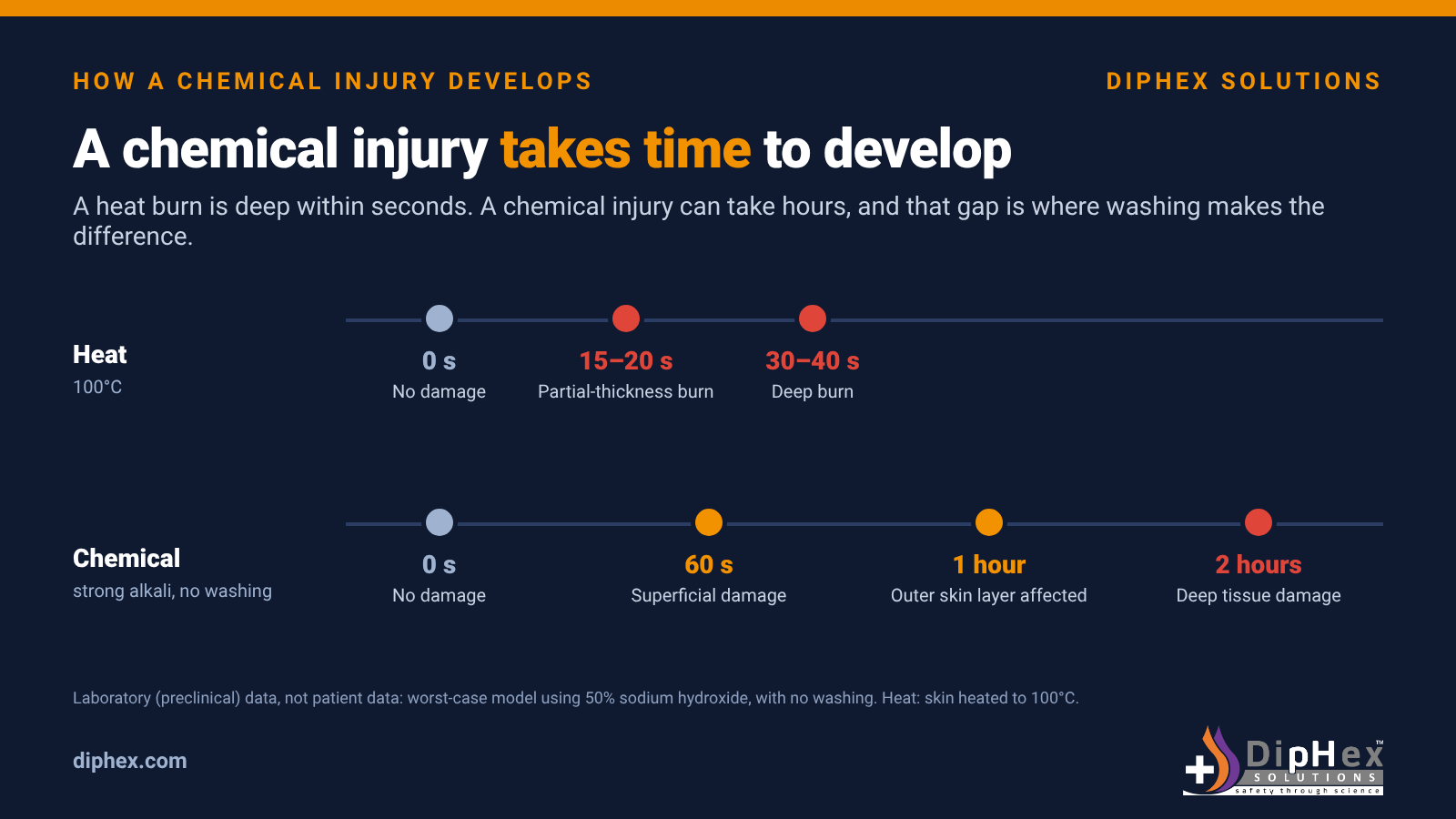
In laboratory tests, a strong alkali (sodium hydroxide) crossed the surface of the eye in under 3 minutes. On skin, in a worst-case laboratory model with no washing at all, the damage built up over hours: superficial damage after 60 seconds, the outer layer of skin affected after an hour, and deep tissue damage after two hours. Washing early, or reducing how concentrated the chemical is, widens that window.
So the question is not only how quickly you wash. It is what the washing does to the chemical that has already got in.
What water and saline do
Water and saline are passive rinses. They dilute the chemical and wash it off the surface. That matters, and washing should always start straight away.
But they cannot remove chemical that has already diffused into the skin or eye. That chemical keeps reacting, and the injury keeps developing.
What Diphoterine® solution does
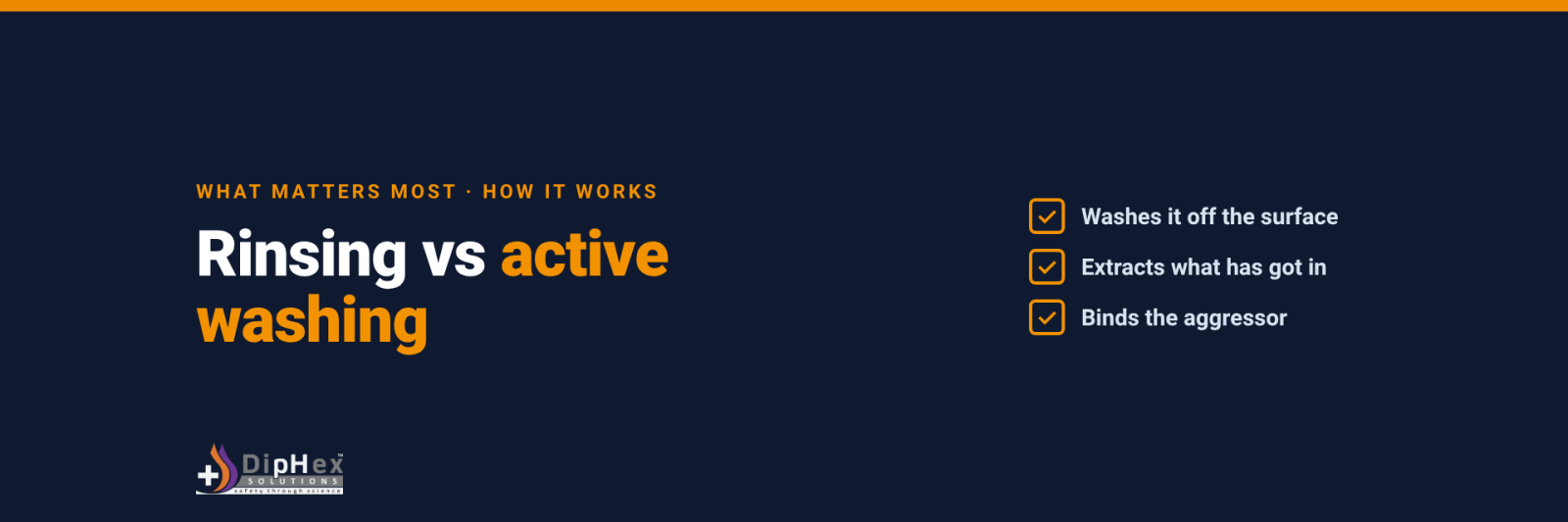
Diphoterine® solution is an active washing solution. It does three things:
- Washes chemical off the surface, just as water does.
- Extracts chemical that has diffused into the tissue but not yet reacted, drawing it back out.
- Binds the aggressor from causing more harm.
Laboratory data show that once a chemical has got into the tissue, washing with Diphoterine® solution helps remove it, so the pH can return to the body’s normal range (between 5.5 and 9). The aim is to prevent a serious injury, or reduce how serious it becomes.
What the laboratory shows
In one laboratory test, sodium hydroxide was applied to the eye for 60 seconds, then washed, while the pH beneath the surface of the eye was measured:
- Rinsing with water for more than 20 minutes did not remove enough sodium hydroxide to prevent harm.
- Washing with Diphoterine® solution for 3 minutes (500 ml) brought the pH back to a level that does no further damage.
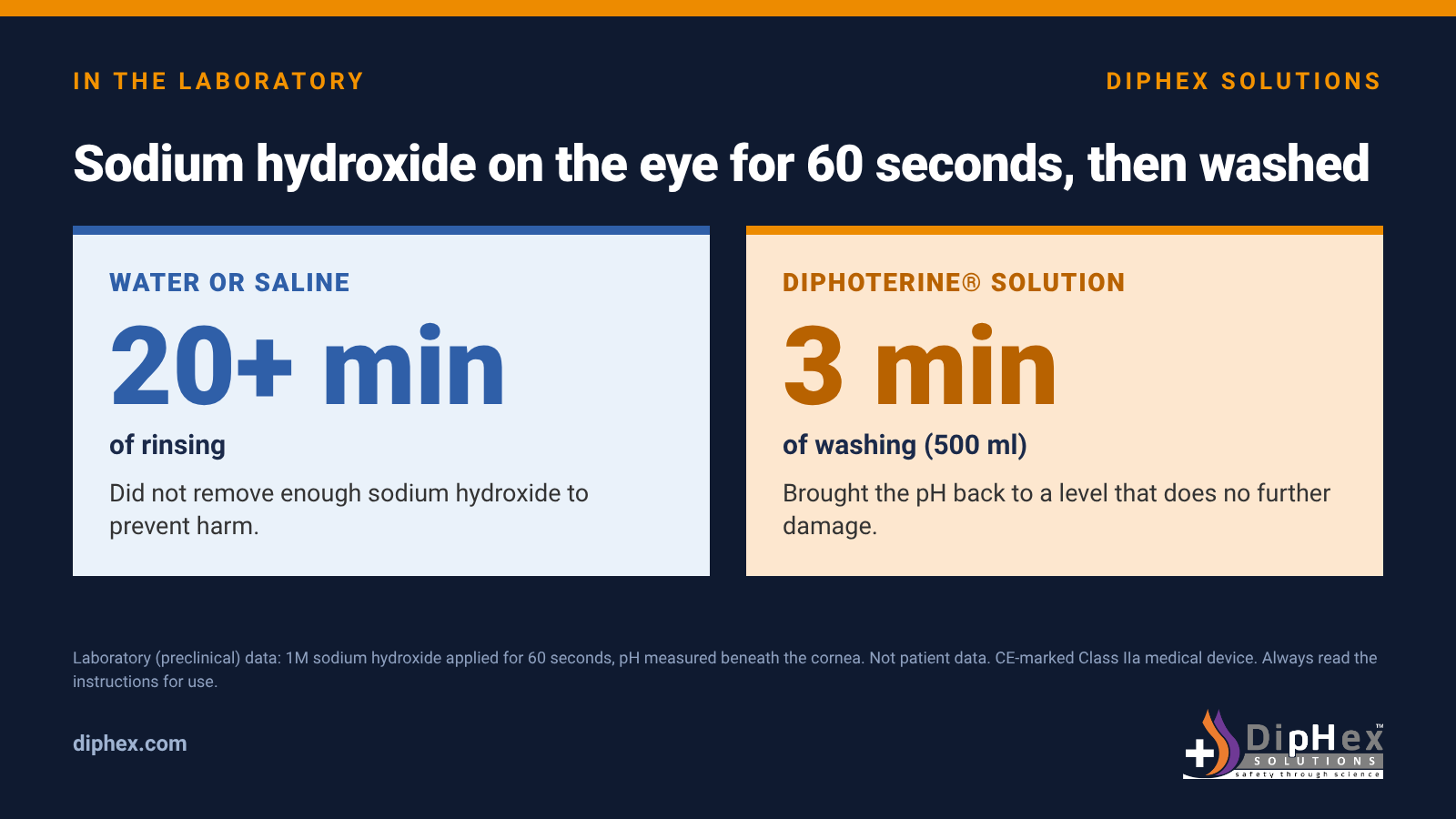
These are laboratory (preclinical) results, not results in patients. For results in real cases, see the evidence.
What this means in practice
The laboratory findings help explain the clinical results. A meta-analysis of 800 published papers found that the washing solution was the biggest factor in how chemical injuries turned out, more than how quickly washing started. In industry, where washing started on site, serious burns occurred in 37 in 100 cases washed with water, compared with 1 in 100 with Diphoterine® solution. See the full evidence.
Washing should still start straight away. Delayed washing with Diphoterine® solution does not remove the need for follow-up care, but it does limit its severity. See what happened when washing was delayed.
What it can be used on
Diphoterine® solution is designed for, and can be used on, all irritant and corrosive chemicals: acids, bases, solvents, oxidising agents, reducing agents, chelating agents and alkylating agents. It is used for external washing of the skin and eyes.
The exception is hydrofluoric acid (HF), which needs a specific approach. For HF splashes, we supply Hexafluorine® solution, designed specifically for HF.
After any chemical splash, the person should seek medical advice, whatever they were washed with. Always read the instructions for use.
Diphoterine® solution is a CE-marked Class IIa medical device, supplied in Great Britain by Diphex Solutions Limited, UK Responsible Person. Manufacturer: Prevor, France. Always read the instructions for use. After any chemical splash, seek medical advice.
