

After a chemical splash, what matters most?
Speed matters. But a meta-analysis of 800 published papers points to something that matters even more.
The question
After a chemical splash at work, which matters most: how fast you start washing, how long you wash for, what you wash with, or the chemical itself?
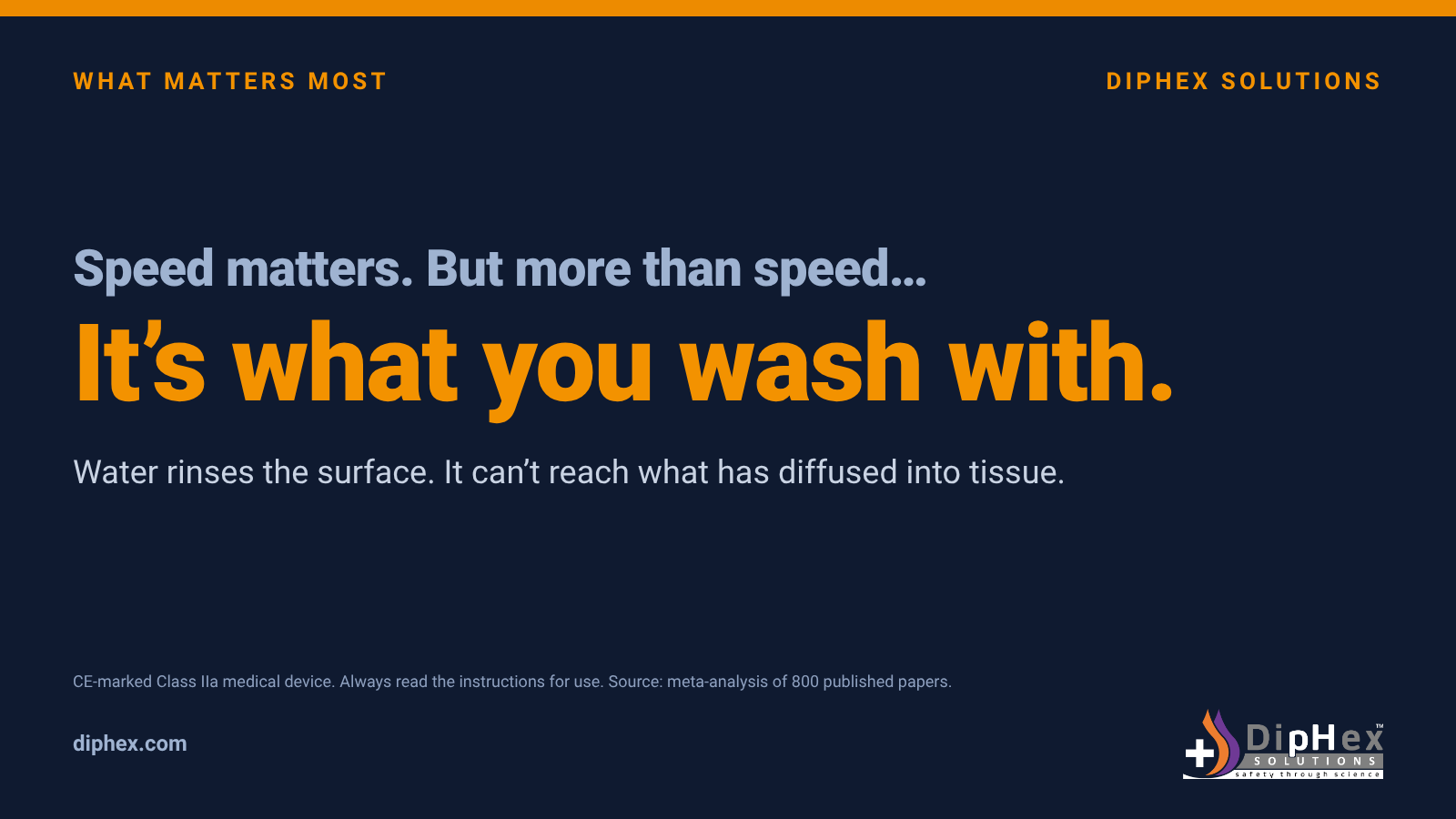
The answer: what you wash with
A meta-analysis of 800 published papers found that the washing solution was the biggest factor in how chemical injuries turned out, more than how quickly washing started, and whichever part of the body was splashed or however harmful the chemical.
That doesn’t mean speed doesn’t matter. Washing should always start straight away. But what you wash with matters even more.
Why: rinsing vs extracting
Water and saline are passive rinses. They dilute the chemical and wash it off the surface. They can’t remove chemical that has already diffused into skin or eye tissue.
Diphoterine® solution is an active washing solution. Like water, it removes the chemical from the surface. Unlike water, it also extracts chemical that has diffused into the tissue but not yet reacted, to prevent or reduce the severity of the injury.
It is used for external washing of corrosive and irritant chemical splashes, on skin and in eyes. It is supplied in Great Britain by Diphex Solutions, the UK Responsible Person.
More than 2,800 industrial sites across the UK already use Diphoterine® solution, along with emergency services and hospitals.
Diphoterine® solution is a CE-marked Class IIa medical device, supplied in Great Britain by Diphex Solutions Limited, UK Responsible Person. Manufacturer: Prevor, France. Always read the instructions for use. After any chemical splash, seek medical advice.
