
Pharmaceutical Industry
Chemical first aid for pharmaceutical manufacturing, R&D and quality control
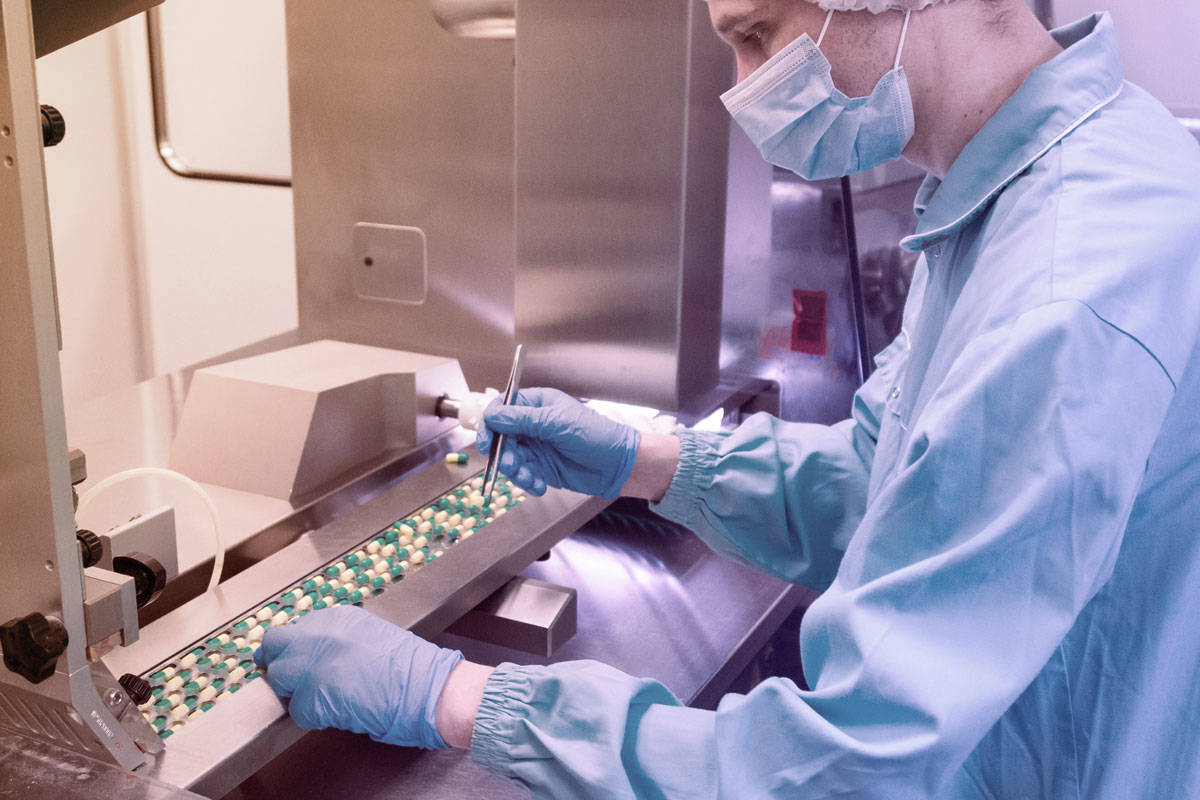
The pharmaceutical industry operates at the intersection of highly regulated manufacturing and extensive chemical use. Across research and development, production, quality control, storage, and maintenance, all classes of irritant and corrosive chemical are present — acids, bases, oxidising agents, reducing agents, chelating agents, and solvents — often at high concentrations and, in manufacturing environments, in large volumes. The regulatory framework that governs pharmaceutical manufacturing also means that a RIDDOR-reportable chemical injury carries consequences that extend well beyond the incident itself.
Research and Development environments typically handle many different chemical substances at the same time, often in limited quantities, but frequently including novel or reactive intermediates for which Safety Data Sheet guidance may be limited. The diversity of chemistry in R&D settings means first aid provision must be effective across an unusually wide range of chemical classes — exactly the scenario that Diphoterine®'s broad-spectrum active chemistry is designed for.
Manufacturing involves the presence of any of the irritant and corrosive chemical classes at high concentrations and large volumes. Synthesis processes use mineral acids and caustic alkalis. Cleaning-in-place operations use strong caustic solutions. Fluorinated solvents and reagents — including trifluoroacetic acid, widely used in peptide synthesis and HPLC processes — are present across many production environments. TFA is a particularly important example: it causes burns that can initially appear mild but continue to damage tissue after surface washing because water alone does not stop its diffusion into skin.
Inspection and Quality Control creates splash risk during routine sampling from production lines and chemical testing in analytical laboratories. These are high-frequency, everyday activities that represent an ongoing and consistent background chemical exposure risk for laboratory and QC personnel.
Storage and chemical offloading carries inherent risk despite PPE and safe systems of work. The moments of highest risk are chemical deliveries, transfers between storage vessels, and the movement of concentrated chemicals within the facility.
Maintenance operations — breaking into pipework, disassembling pumps, working on pressurised systems — carry the highest acute chemical burn risk on any pharmaceutical site. Systems under pressure and process residues in pipework create exposure scenarios that PPE alone cannot eliminate.
Cleanroom cleaning often uses highly corrosive chemicals to achieve the hygiene standards required in GMP manufacturing environments. Workers carrying out cleaning operations in pharmaceutical production areas face concentrated chemical exposure risk as part of their routine work.
Diphoterine® is the appropriate broad-spectrum active decontaminant for the full chemical range encountered in pharmaceutical settings — covering all seven major classes of chemical aggressor, active from the first second of application, and portable enough to be stationed at laboratory benches, production line access points, and maintenance areas throughout the facility. Where hydrofluoric acid or fluoride-containing compounds in acidic media are present — in certain synthesis processes, analytical applications, or specialist production — Hexafluorine® is the dedicated Prevor decontaminant, used as part of a specific HF protocol.
Chemicals of note in this industry:
All irritant and corrosive chemical classes. Hydrofluoric Acid and fluorides in acidic media may also be present in certain applications — for which Hexafluorine® is recommended.
COSHH and compliance
Pharmaceutical COSHH compliance operates within a GMP framework that raises the stakes considerably beyond standard workplace health and safety. An improvement notice from the HSE for inadequate chemical first aid provision at a GMP-regulated site has regulatory implications that extend to product licences and manufacturing authorisations. Diphoterine® systems conform with EN15154 Parts 3 and 4 — the European Standards for Emergency Eye and Skin Decontamination Equipment.
Contact DipHex on 01622 851000 or at enquiries@diphex.com to discuss chemical first aid provision for your pharmaceutical site.